
Menu
Almshouses are one of the oldest and most enduring forms of charitable support in the UK. Long before the modern welfare state, they provided something simple yet powerful: a safe place to live for those who needed it most.
Their story stretches back over a thousand years—and, remarkably, their purpose has remained largely unchanged.
The origins of almshouses can be traced to the Anglo-Saxon period. One of the earliest recorded examples is linked to St Oswald, Bishop of Worcester, who in the 10th century is believed to have established accommodation for people in need connected to the monastery at Worcester.
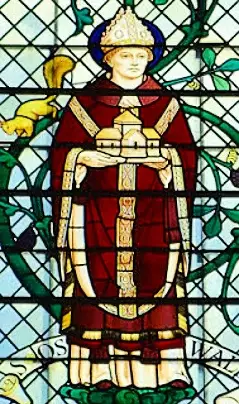
This early form of supported housing was rooted in values of charity and community—principles that still underpin almshouse living today. Given Worcester’s close proximity to Birmingham, it’s a heritage that feels particularly close to home.
By the medieval period, almshouses had become more widespread. Wealthy landowners, merchants and members of the clergy would establish them through charitable gifts, often to support older people, widows, or those no longer able to work. Many of these foundations were tied to a specific parish or community, ensuring that local people were cared for.
Despite huge social changes over time, almshouses have endured. While their design and governance have evolved, their purpose has remained consistent: to provide secure, affordable homes for people in need.
Traditionally, almshouses were arranged in small, close-knit settings—often cottages gathered around a shared space—encouraging a sense of community and mutual support. That spirit still defines almshouse living today.
Through the Victorian era and into the modern day, many almshouse charities have adapted and improved their homes, while holding firmly to their founding purpose.
What sets almshouses apart is not just their history, but their philosophy.
Residents are not tenants in the usual sense—they are beneficiaries of a charity. Their homes are provided not for profit, but as part of a long-standing commitment to support people in later life or those experiencing financial hardship.
This creates a different kind of environment—one built on stability, respect and a shared understanding that everyone is part of a community.

At BCOP, we are proud to continue this long-established tradition through our almshouse communities, including Emma Ball Homes, Wiggin Cottage Homes and Newman Court.
Each of these schemes reflects the enduring purpose of almshouse living—providing safe, secure and affordable homes for older people in Birmingham.
As with all almshouses, residents are beneficiaries rather than tenants, and instead of paying rent, they make a modest weekly maintenance contribution—helping to keep the homes well cared for while remaining affordable.
While each scheme has its own character, they share a common purpose—to offer not just a place to live, but a place to belong. Residents benefit from a peaceful, supportive environment, where they can enjoy later life with dignity and reassurance.
Read more about almshouses and their history on the Almshouse Association website