
Menu
This year’s report looks at 2023/2024 data.
It shows that 2023/2024 was the first year since 2015/2016 where local authorities not only spent more money on social care but also increased the number of people being supported due to a significant increase in local authority spending power.
The King’s Fund warns that this positive development is fragile and that loading unfunded costs on care providers will undermine it.
The review argues that successive governments have failed to take responsibility for the costs of introducing the statutory minimum wage in the social care sector. This had created an annual (until 2023/24) chain reaction of increased costs to providers, resulting in increased fees paid to them by local authorities but ultimately, fewer people accessing publicly funded long-term care as local authorities try to balance their books.
The government’s decision to increase employer’s National Insurance Contributions adds to this burden for both providers and local authorities.
Below we’ve outlined some key trends from the report.
Demand continues to increase with requests for social care support rising from 2 million in 2022/23 to 2.1 million 2023/24. Of this increase:
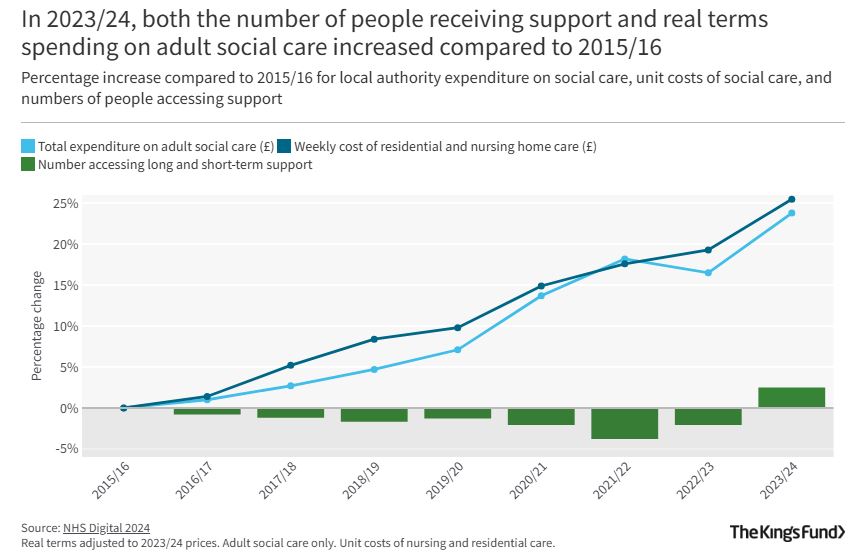
In terms of people actually accessing care and support, this has increased for the first time since 2015/2016 but it is still below the total number receiving care and support in that year:
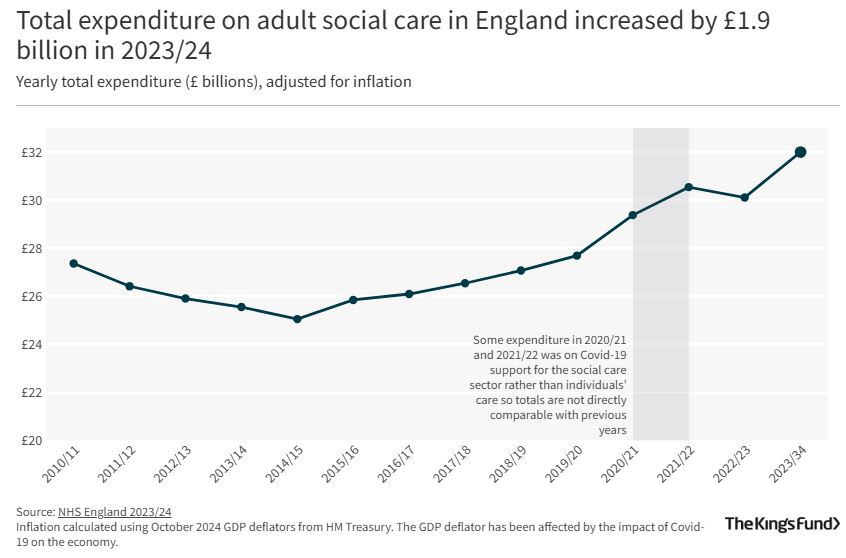
The total expenditure on adult social care in England increased by £1.9bn in 2023/24, reaching £32bn. In 2023/24, total expenditure was £4.6 billion more in real terms than in 2010/11.
In terms of how money was used by local authorities:
The average rates paid by LAs have also increased, although we suspect not enough to cover the true cost of care:
Interestingly, according to the review, provider profitability does not appear to be a factor in increasing fees. There was no clear trend of increasing profits for the largest providers of publicly funded residential care between 2015 and 2023, while providers of homes for working-age adults show generally declining profits. It’s slightly different in homecare where profits increased from 6.3% in 2015 to 7.6% in 2023, though this is a fall from their peak of 10.8% in 2012.
Concerningly, fewer unpaid carers now receive direct support due to constraints in local authority budgets.
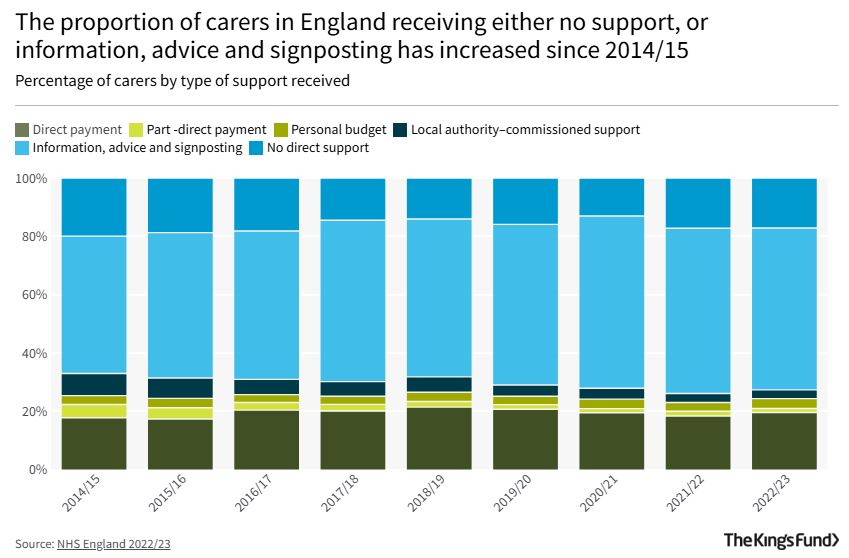
The number of carers receiving direct support from local authorities was lower in 2022/23 than it was in 2015/16. There has also been a shift in the type of support they receive. Fewer carers (27% compared to 31% in 2015/16) now receive paid support and more receive advice, information and signposting (56% compared to 50% in 2015/16).
The number of people provided with respite care delivered to support their carers fell from 57,000 in 2015/16 to 36,000 in 2022/23.
You can read the full report King's Fund form authors Simon Bottery and Danielle Jefferies here.
Find out more here about the National Care Forum, the leading voice for not for profit social care and support providers here. BCOP re members of NCF.